When polymers meet primitive membranes: How molecular cooperation may have helped life begin

A new study suggests that simple molecules on early Earth may have worked together to create more stable, cell-like structures, offering fresh clues about one of science's biggest questions: how life began. Led by Dr. Moran Frenkel-Pinter of Hebrew University and her postdoctoral researcher, Dr. Rotem Edri, the research shows that two types of simple molecules, fatty acids and hydroxy acids, can combine to create structures that are stronger and more stable than either molecule can form alone.
The science section covers breakthroughs in medicine, physics, biology, and technology. We surface discoveries that expand what humanity can do, from new treatments reaching clinical trials to engineering feats that seemed impossible a decade ago. Every link goes to the original publisher so you can read the full study or press release yourself.

BY THE OPTIMIST DAILY EDITORIAL TEAM Researchers have planted 9,000 milkweed plants along roads in six North Florida cou…

BY THE OPTIMIST DAILY EDITORIAL TEAM Holding in a sneeze carries more risk than most people assume. The injuries it can …

Earth Observatory Science Wildfires Smoke Blankets Oregon Earth Earth Observatory Image of the Day EO Explorer Topics Al…
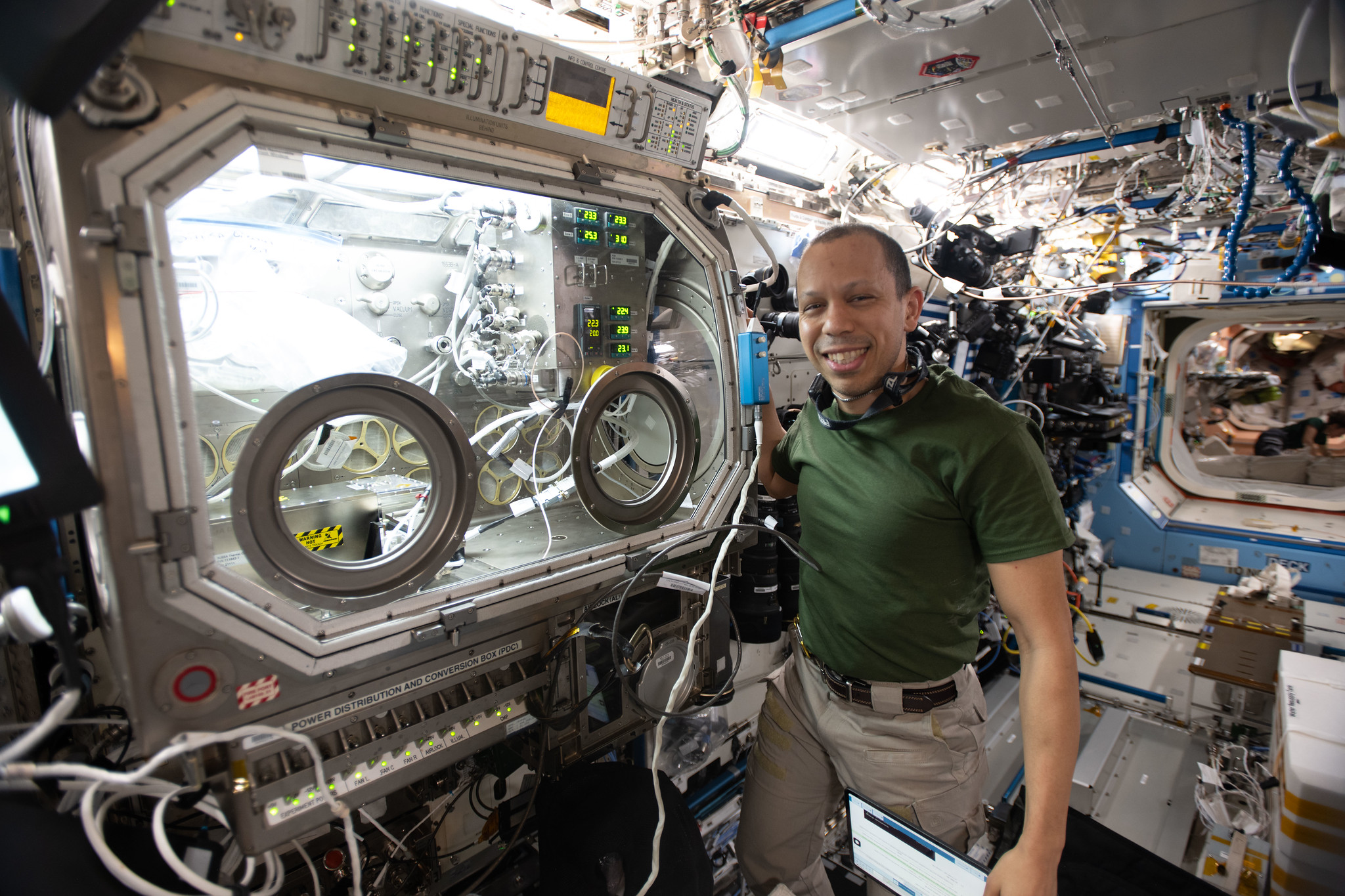
NASA astronaut and Expedition 74 flight engineer Chris Williams shows off the Destiny laboratory module’s Microgravity S…