Synthetic rotation brings black hole energy theory into lab, amplifying waves

More than half a century ago, Sir Roger Penrose envisioned a scenario in which energy could be extracted from a black hole spinning at extreme speeds. He proposed that a particle entering its ergosphere-a region of space dragged around by a rotating black hole-could split into two. One part could fall into the black hole while the other escaped carrying more energy than the original particle. Building on this theory, physicist Yakov Zel'dovich later predicted that a wave interacting with a suffi
The science section covers breakthroughs in medicine, physics, biology, and technology. We surface discoveries that expand what humanity can do, from new treatments reaching clinical trials to engineering feats that seemed impossible a decade ago. Every link goes to the original publisher so you can read the full study or press release yourself.

BY THE OPTIMIST DAILY EDITORIAL TEAM The story of women in art history is mostly a story of not getting seen. Not becaus…
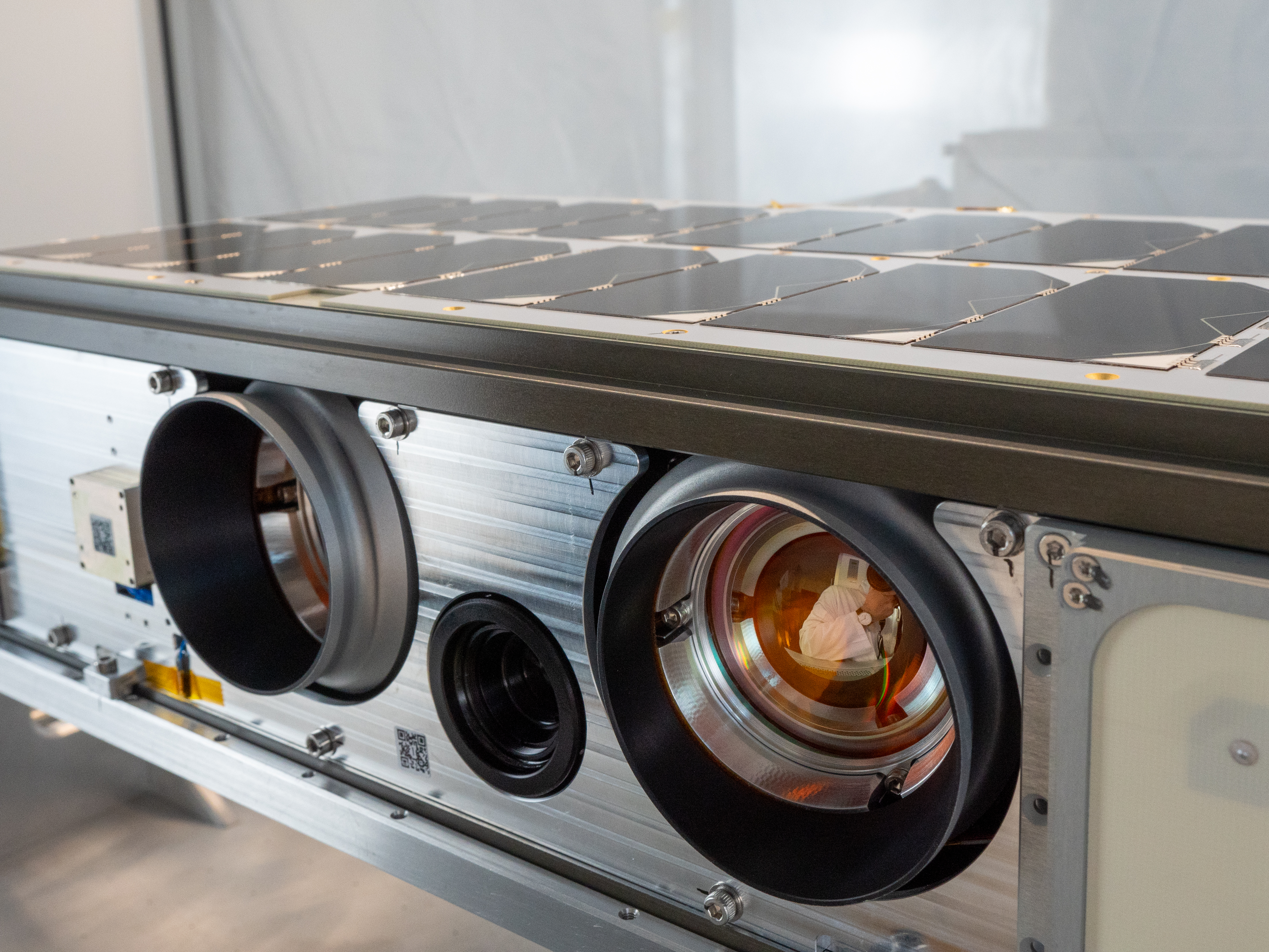
BY THE OPTIMIST DAILY EDITORIAL TEAM Conventional satellites can’t detect a wildfire until it’s roughly the size of a cr…

India's new brainstem atlas offers scientists an unprecedented map of one of the brain's least known regions.

Practice may do more than make perfect. Researchers found that extensive training physically reorganizes the brain, allo…